


Coral Reef Food Chain for Kids | Free Preschool Science Activity
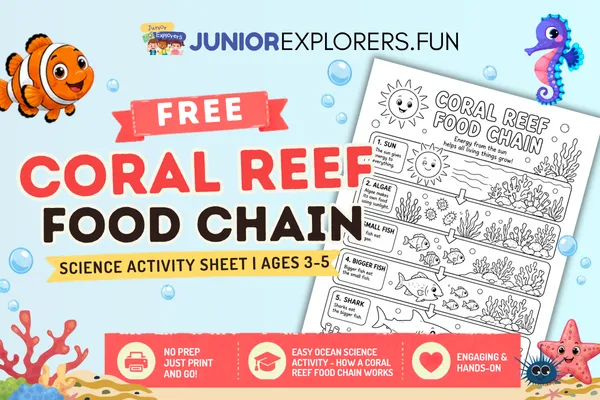
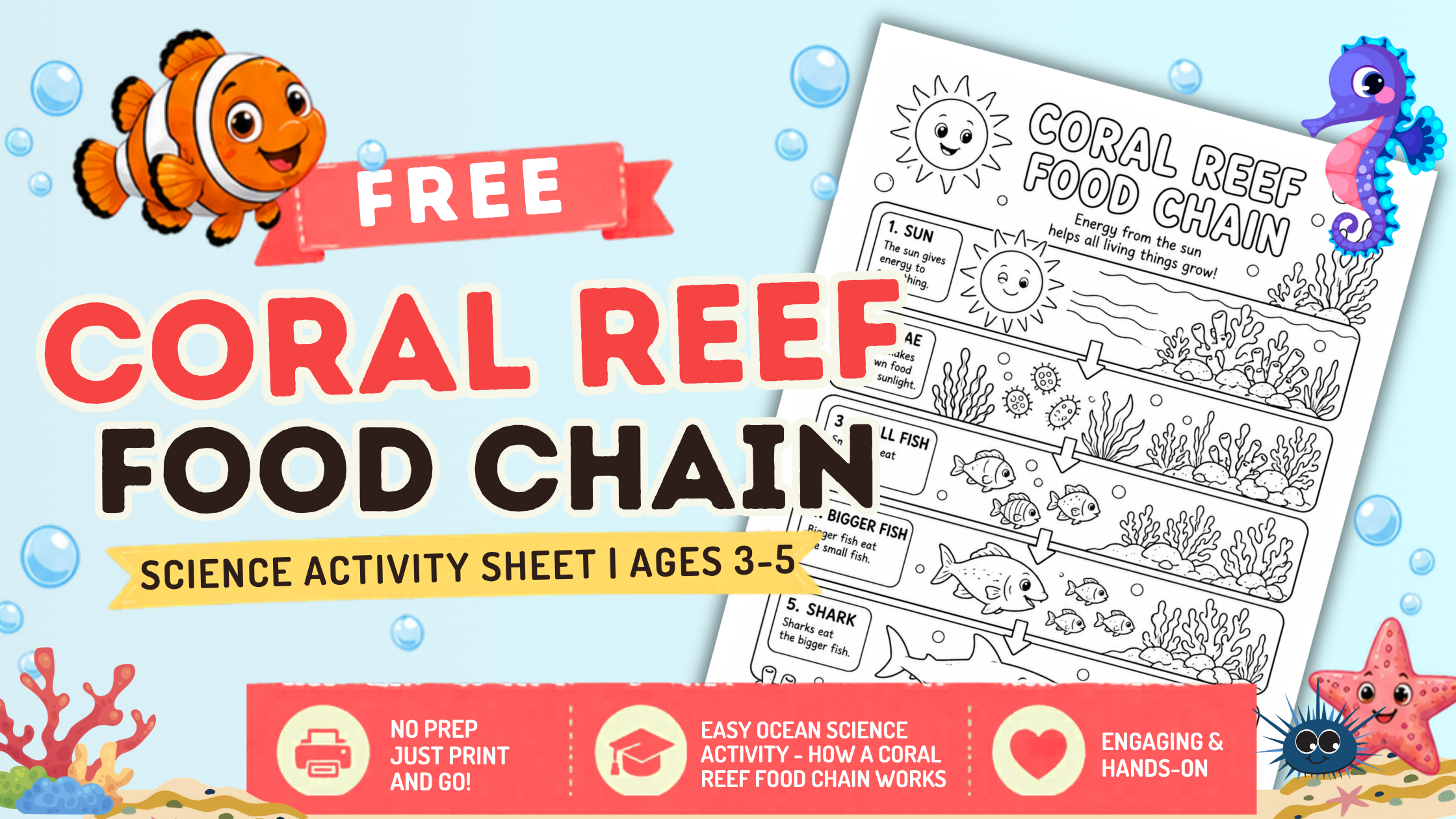
Introduce your little learner to the amazing world beneath the waves with this simple coral reef food chain activity for preschoolers. Children can follow energy from the sun to algae, small fish, bigger fish, and finally a shark while discovering how living things in a coral reef depend on one another. Plus, you can download our FREE Coral Reef Mini Adventure Pack for a full day of preschool learning with science, math, early literacy, vocabulary, and creative play.
Exploring the Coral Reef Food Chain with Preschoolers
Coral reefs are full of life! Colorful fish dart between the coral. Sharks cruise through the water. Tiny organisms live alongside animals of all different shapes and sizes. But have you ever stopped to wonder:
How does all that life get the energy it needs to survive?
That's where the food chain comes in. Learning about a coral reef food chain is a wonderful way to introduce preschoolers to early science concepts like habitats, living things, food, energy, and the ways plants and animals depend on one another.
And it doesn't have to be complicated. For young learners, you can start with one simple idea: Living things in the coral reef are connected.
What Is a Food Chain?
A food chain shows how energy moves from one living thing to another. For preschoolers, you don't need to dive deeply into scientific terminology. Instead, follow a simple chain together and talk about where each living thing gets its energy.
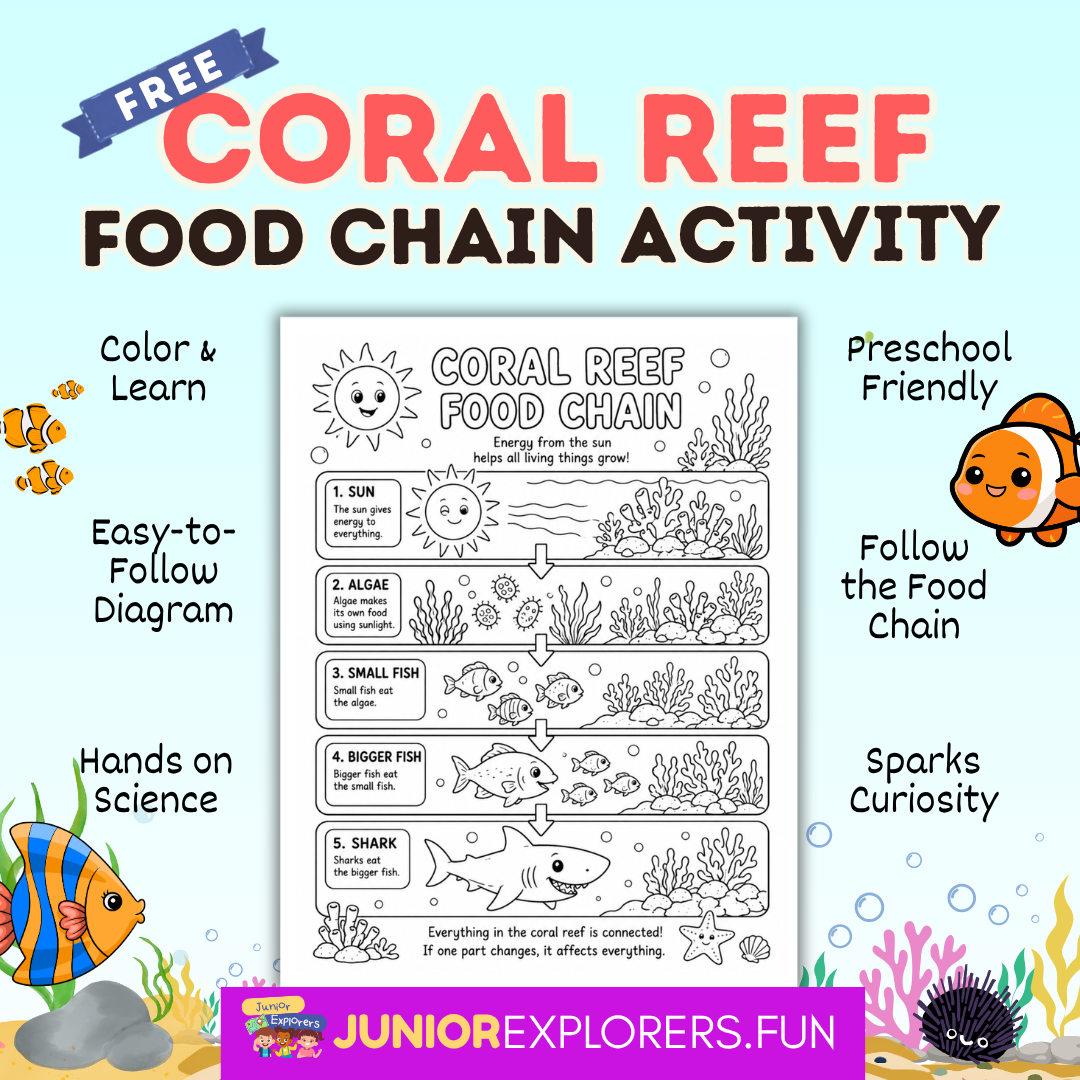
Our Coral Reef Food Chain activity follows five steps:
Sun → Algae → Small Fish → Bigger Fish → Shark
Start at the top and work your way down the page.
1. It Starts With the Sun ☀️
The sun provides the energy that starts our food chain. You might ask your child: "What do you think the sun helps grow?"
This is a great opportunity to connect the concept to something your child already knows. They may have seen plants growing in a garden or noticed how houseplants sit near a sunny window.
2. Algae Uses Sunlight
Next comes algae. Algae can use energy from sunlight to make its own food. This makes it an important starting point for many aquatic food chains. For preschoolers, you can keep the explanation simple: "The algae uses sunlight to grow."
Then point to the algae on the worksheet and let your child color it as you talk.
3. Small Fish Eat the Algae 🐟
Now our food chain begins moving through the animals of the reef. Some small fish eat algae, receiving energy from the food they eat. Ask: "What is the small fish eating?"
Let your child follow the food chain backward to find the answer.
4. Bigger Fish Eat Smaller Fish
Next, a bigger fish eats the smaller fish. This is a fun place to introduce comparisons, too. Which fish is bigger? Which is smaller? How many small fish can your child find Suddenly your science conversation is naturally incorporating observation, size comparison, and counting.
5. Sharks Can Eat Bigger Fish 🦈
Finally, we've reached the shark! Some sharks eat fish and other animals, placing them higher in marine food chains. Now try tracing the entire food chain together:
Sun → algae → small fish → bigger fish → shark.
You can even have your child point to each picture while explaining what comes next.
The Big Idea: Everything Is Connected
Once your child understands the sequence, ask:
"What do you think might happen if one part of the food chain disappeared?"
There doesn't need to be a perfect answer. The goal is to get them wondering. What if there weren't enough small fish? Would the bigger fish still have something to eat? What if the algae couldn't grow? Instead of simply memorizing the order of a food chain, your child begins thinking about relationships within an ecosystem.
That's a pretty big science idea tucked inside a preschool conversation!
Easy Ways to Extend the Activity
You can keep exploring without turning this into a complicated lesson. After completing the worksheet, pretend to be different members of the food chain. Stretch your arms out like sunshine, sway like algae in the water, swim like a tiny fish, become a bigger fish, and finally cruise around like a shark. At lunch or snack time, talk about where our own food comes from. Or grab some toy ocean animals and see whether your child can arrange them into different groups.
You could also visit the library and look for a picture book about coral reefs, watch a short child-friendly reef video, or visit an aquarium and see how many animals your child recognizes. The important part isn't doing more. It's giving your child opportunities to connect what they're learning to the world around them.
Turn It Into a Full Day of Coral Reef Learning 🪸
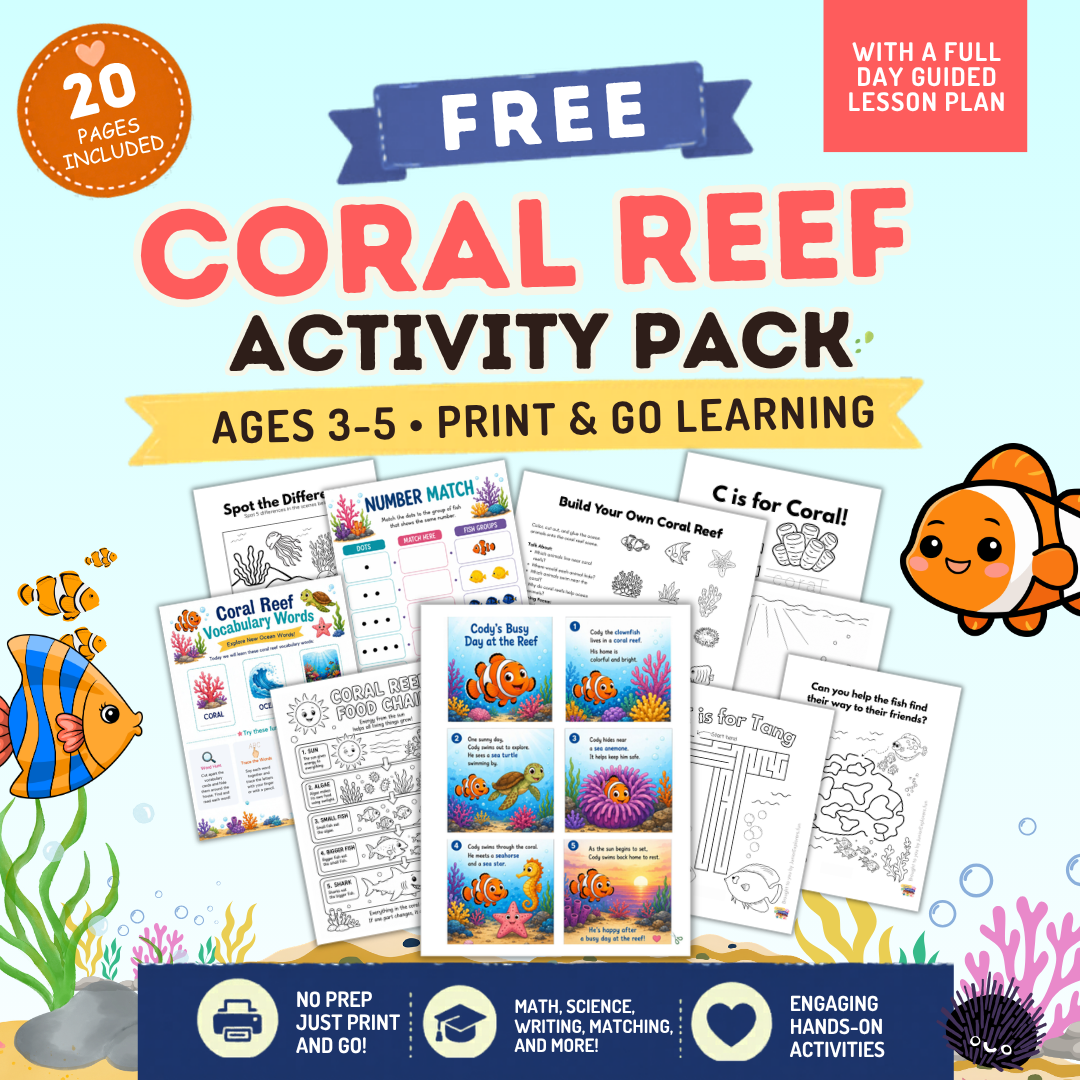
Want to keep exploring? Our Coral Reef Food Chain activity is part of the FREE Coral Reef Mini Adventure Pack for preschoolers ages 3–5. Instead of searching for separate activities and trying to turn them into a lesson yourself, we've planned the adventure for you.
Your little explorer will:
🐠 Read an original coral reef story and practice reading comprehension
🪸 Learn new coral reef vocabulary
🦈 Explore the coral reef food chain
🔢 Practice counting and number matching
🎨 Build their own coral reef scene
You'll also receive a simple one-page educator guide that walks you through the activities and gives you conversation prompts along the way.
Ready to Dive In?
Give your preschooler a full day of coral reef-themed learning, completely FREE.
[GET THE FREE CORAL REEF MINI ADVENTURE]
Print your activities, follow the guide, and head beneath the waves for a day of discovery.

